Thank you for being a partner!
If you have any content you'd like to submit to the website, please visit this page https://aquipor.com/article-submission/ and fill out the form. When approved, your submitted content will appear at https://aquipor.com/epcmpartners/
Thank you,
Aquipor Team


AquiPor had an amazing year in 2020, learn from our CEO Greg Johnson about our historic year here at AquiPor.
Stormwater pollution has quietly become the most pervasive environmental issue that cities face today. As U.S. cities discharge trillions of gallons of untreated stormwater, wastewater, and raw sewage into clean waterways every year, a collective paradigm shift is desperately needed in urban water management. Larger storms are dropping more rain in less time, revealing what years of rapid urbanization and deteriorating infrastructure have done to our natural water systems.
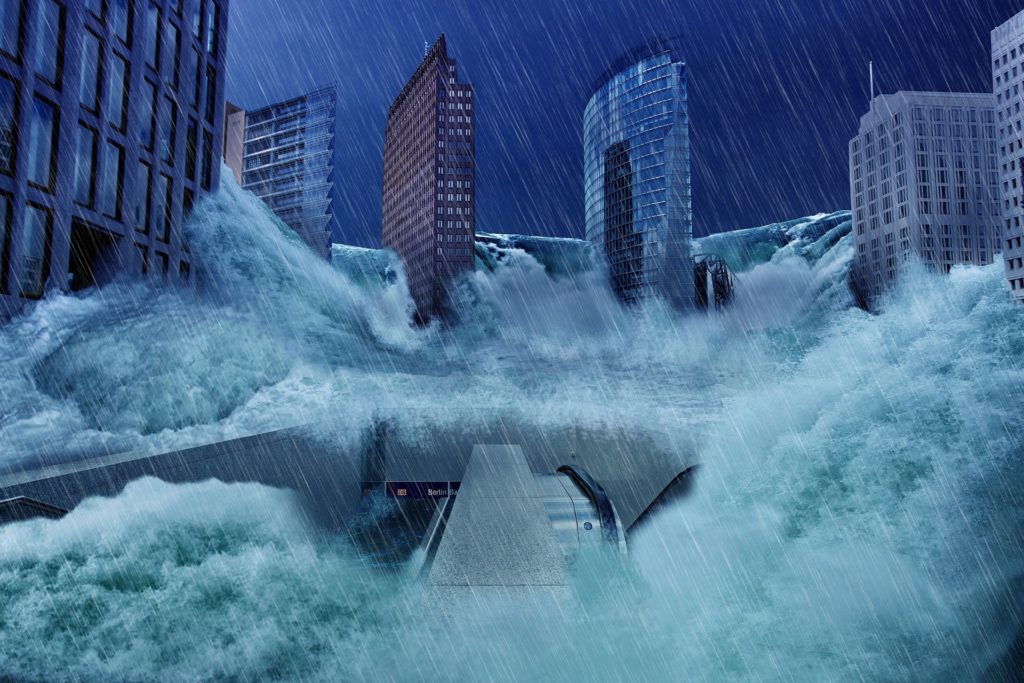
The EPA estimates a substantial funding gap for stormwater management over the next 20 years, and surely lack of funding can always be a convenient scapegoat. But as cities continue to lean heavily on old solutions to solve new water challenges, we’re reminded of something: if a problem worsens with the more money you throw at it, then you’ve got a broken paradigm. And like it or not, this characterizes the current state of stormwater infrastructure in the U.S.
The combination of increasing rainfall and vast impervious surface area in cities has introduced overwhelming volumes of stormwater that legacy infrastructure simply can’t contend with. Even super-sized tanks and larger system designs are scrutinized as outdated in the face of today’s extreme weather. As is the case with almost every facet of life, the status quo is no longer viable.
Fortunately in the midst of all of these headwinds, there is a silver lining. The unlikely combination of forward-thinking legislation, advanced technology development, and new realities are already ushering in the future of stormwater management. In combination, these three inflection points are poised to drastically change urban stormwater infrastructure moving forward.
New Realities usher in New Beliefs
For decades, regulators and decision-makers operated from the reactive belief that stormwater was a waste product to be captured and treated. Depending on the region, land was developed to withstand 10, 25, and even 100 year storms, and grey infrastructure was built and sized for the expectations of an era that is long gone. This one-size-fits-all configuration for managing the collection, treatment, and discharge of water has really never resulted in the best use of discharged water, as conditions constantly change. Never has this been more obvious than today.
As urban water systems deal with larger quantities of stormwater, regulators have been forced to adjust their lens. For every 1 degree (Fahrenheit) increase in temperature, the atmosphere holds about 4 percent more water vapor. Inevitably this is leading to much heavier and more intense rain events in certain areas. Stormwater management design used to primarily deal with water quality - ie., limiting the flow of chemicals, nutrients, and sediment into clean waterways. But in just a few recent years, the challenge of controlling water pollution has morphed into the growing challenge of protecting property and livelihoods.
All of this has brought forth a subtle and important change in how stormwater management is viewed. Over the past decade, green infrastructure was mostly given lip service as an integrated stormwater management approach. But today, the transition to green is seen as a necessity to confront the dual threat of urban flooding and increased water pollution. As many cities face budget cuts that make large grey infrastructure projects impractical in the near future, a more natural approach to stormwater management is proving to have both economic and environmental benefits for cities of all sizes.
Regulation with an eye toward the future
Regulators deserve some credit for acknowledging the situation that cities are in when it comes to stormwater management. By ushering in the bi-partisan provisions of the 2019 Water Infrastructure Improvement Act, legislators have given cities big incentives to integrate green infrastructure into the larger water infrastructure objectives of their capital plans.
It’s my belief that green infrastructure will be prioritized at levels we’ve yet to see in U.S. cities and the integrated planning framework serves to reinforce that. Cities that routinely defer large wastewater treatment projects or grey infrastructure projects can now use integrated planning to meet Clean Water guidelines in lieu of those large and often unaffordable capital projects. This framework can be especially beneficial to municipalities with existing consent decrees.
Innovative green infrastructure approaches that prove to achieve the same desired outcome of a traditional grey approach can be used to satisfy existing consent decrees and to meet Clean Water Act obligations. As municipal budgets shrink, this framework opens the door for large-scale green infrastructure in our cities. But this will only be possible IF and WHEN innovation in green infrastructure finally comes of age.
Green Infrastructure: Great in Theory.
As a theory, green infrastructure is a no-brainer. The multiple roles that it can play in natural stormwater drainage, pollution control, aquifer recharge, and reducing urban heat island effect have the potential to supply cities with major environmental, societal, and economic benefits. But as it exists today, the current green infrastructure toolkit has clear limitations.
To date, green infrastructure has carried the stigma of expensive maintenance and lack of scalability. Rain gardens, vegetated swales, and stormwater ponds require specialized and often tedious maintenance. In many cases these solutions also consume usable space without adding tangible value to a property (ask any developer how they feel about setting land aside for stormwater detention).
Permeable pavement was developed with the duality of filling the stormwater management role while maintaining the usefulness of normal pavement, but existing technologies have been the same for decades - still prone to clogging and too weak for wide scale implementation. Simply put, existing green infrastructure technologies do not scale at a level that makes them easily integrated into larger water infrastructure objectives. But just as market and regulatory inflection points have bubbled to the surface recently, so too has an inflection point in material technology and engineering design. This technology inflection point may redefine the role of hard surfaces in green infrastructure and finally pave the way to its wide-scale implementation.
Reimagining 1,000,000 miles of hard surfaces
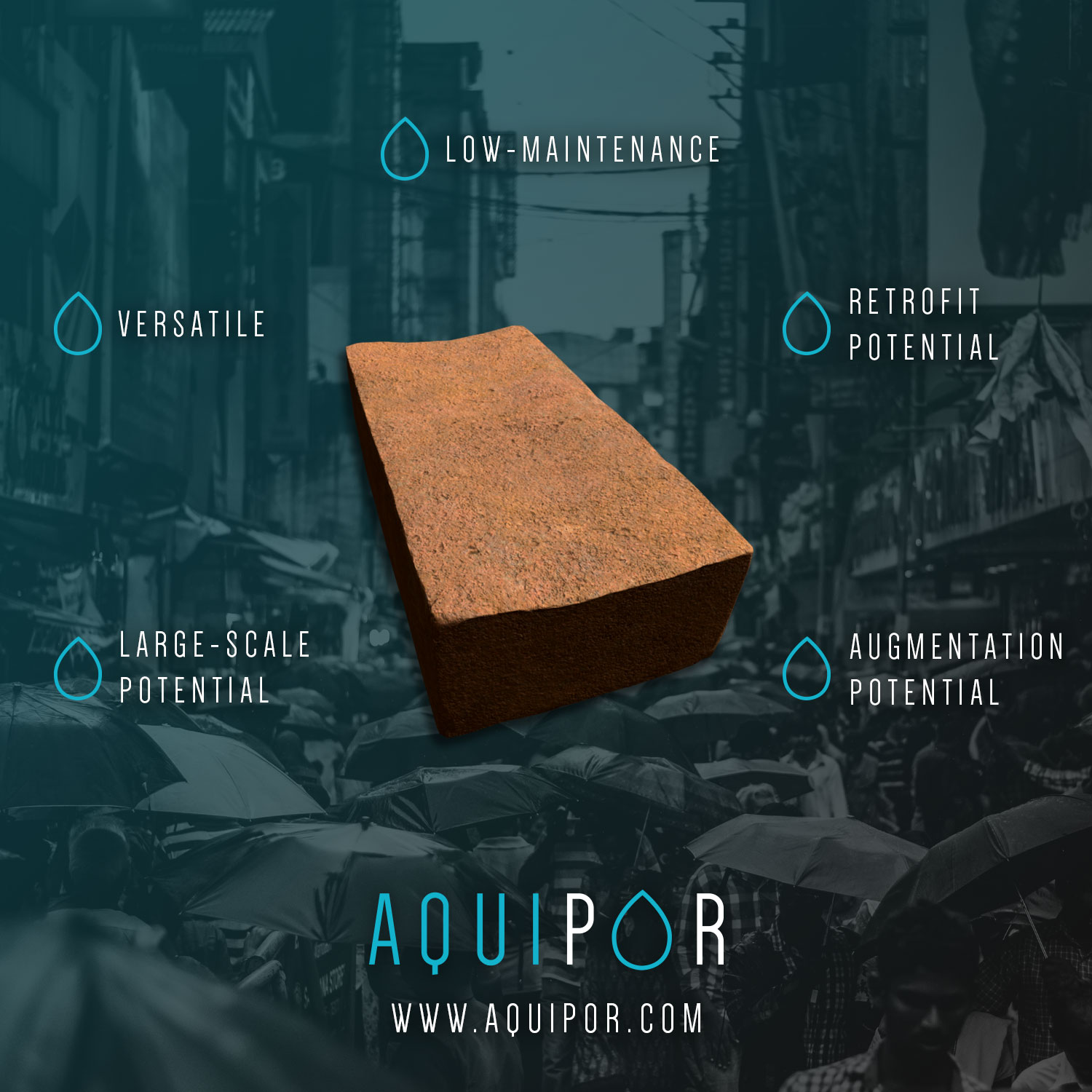
Despite the known short-comings of existing permeable pavements, the ability to utilize a hard surface material to manage stormwater onsite, while still providing the functionality of normal pavement has a major role to play in the future of urban water management. New permeable material technologies are being advanced with unique characteristics in strength, permeability, and material porosity that measures less than 5 microns in size - capable of filtering dirt, debris, and particulate matter onto the surface of the material for easy and cost-effective maintenance.
These materials are being developed for wide-scale integration into urban stormwater management systems as part of engineered designs that turn the edge of streets and sidewalks into permeable drainage zones, greatly reducing the footprint of existing stormwater facilities. Instead of full permeable street sections, or land set asides for stormwater ponds, we can reimagine the curb, gutter, and sidewalk as a natural stormwater drainage facility. Designed with the proper runoff coefficients, hydrologic, and structural factors in mind, the street becomes part of an infiltration corridor where groundwater recharge happens within existing cityscapes.
Deployed at scale we imagine the impact to be significant over the coming years.
Like so many things in our society, the status quo has run its course. Mitigating urban flooding and reducing the volume of stormwater to treatment facilities is both critical and achievable for a sustainable water future. As technology and institutional decision-making comes of age, the innovation deficit in water management will continue to disappear. So we better act with urgency.
Recently on the AquiPor podcast, we had the privilege of interviewing Melissa Meeker, the cofounder and CEO of The Water Tower. Melissa brings over 25 years of executive experience in water resources management to the conversation, and we covered a wide range of topics. We discussed everything from the role of green infrastructure in water management to the encouraging signs of more women and minority leaders in STEM careers. Seemingly, the conversation kept coming back to a brighter, more innovative future in water management.
Be sure to check out the interview and follow the work that Melissa is doing at The Water Tower. Based in Gwinnett County in the Atlanta, GA area, The Water Tower is creating an ecosystem of water innovation by fostering new technology development, applied research, on-site demonstrations, workforce development and training, and stakeholder engagement all under one roof. There’s reason to be bullish on this integrated planning, “one-water” movement that’s taking place in the water sector!
Melissa can be found on Twitter @MLMeekerWater and on LinkedIn
And The Water Tower can be found at www.theh2otower.org, on Twitter @theh2otower and Instagram @theh2otower.
Enjoy!
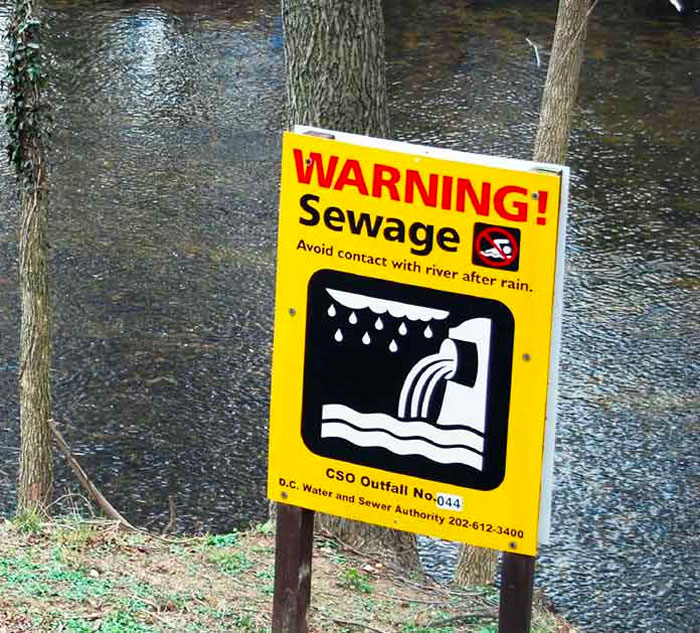
It's pretty unbelievable how much sewage and pollution goes from our hard surfaces (i.e. concrete, asphalt, etc...) into American rivers every year. It's an 860 billion gallon problem that needs a solution just as big.
Read the article posted by AmericanRivers.org to learn how big this problem is. Then check out what AquiPor wants to do to stop this.
“The way you can identify a broken paradigm,” says George Gilder, “is that the problem gets worse the more money you spend on it.”
George Gilder is a futurist and a technology prophet of sorts. I’m sure George didn’t have U.S. water infrastructure in mind when he made the comment above, but it certainly applies. Crumbling infrastructure and unpredictable weather events are stressing urban water systems to the brink of failure, with regulators calling for more than $700 billion in capital improvements for our nation’s water infrastructure over the next few years.
Hefty investment is needed in water infrastructure to ensure a clean, more secure water future. But simply throwing capital at larger versions of outdated solutions is bad policy. You don’t put a band-aid on a puncture wound.
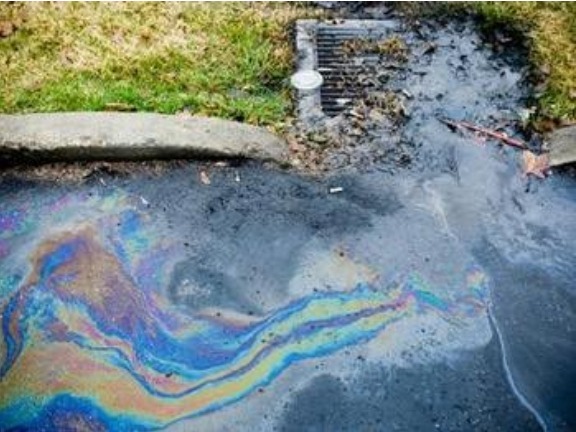
The average citizen doesn’t think much about it, but pollution from stormwater runoff is arguably the most pervasive environmental issue that cities face today. Ironically, about 860 municipalities around the U.S., discharge raw sewage into clean waterways by design. These old combined sewer systems are forced to handle sewage, wastewater, and stormwater within the same arrangement. So when rainfall can’t soak into the ground, it runs off of pavements and into stormwater collection drains by design.
Outdated Design
Relying solely on this type of water infrastructure may have been feasible decades ago and before cities were sprawling and caked with pavement. Today, our cities have urbanized to the point where non-draining, hard surfaces make up the overwhelming majority of land cover. Three-quarters of Philadelphia, for example, is impervious. So when it rains, huge volumes of runoff finds its way to stormwater drains, picking up every pollutant on the pavement along the way. The more pavement, the more polluted runoff for these combined sewer systems to handle.
Pavement is ubiquitous because it’s useful. And until Elon Musk’s Hyperloop arrives or we’re traveling like the Jetsons with Point-to-Point Aerial Transport, pavements in the form of streets, sidewalks, and parking lots will continue to be crucial for urban mobility and transporting people and goods. So perhaps we should rethink how we design stormwater infrastructure to account for this. It probably starts with an understanding that the old approach of “moving water out” hasn’t just led to mass pollution of waterways, it’s also increased the likelihood of major flooding….and worse still, large coastal cities are literally sinking as aquifers get robbed of natural recharge.
Time for a Paradigm Shift
From my vantage, there is a general feeling of cities scrambling to become more “resilient” as the climate alarm shrieks. But like any meaningful issue, the water problem can’t be solved just with politician’s logic — “we must do something. This is something. Therefore we must do this!” Because by itself, this is proving to be ineffective.
Fortunately, it’s possible to innovate our way to a cleaner, more secure water future. And while “innovation” usually connotes the latest new technologies, it’s the large governing institutions that hold the key to innovation. The key then, is for these institutions to simply embrace it.
Cities, regulators, and large institutions can be painfully path dependent when it comes to embracing new approaches. There are good reasons for this, which we won’t get into here. Fortunately, we’re starting to see progress from some cities as they make more meaningful investments in green infrastructure. We’re seeing vitality in the private sector with an array of startups advancing various software and hardware technologies for monitoring runoff and sewage overflows. There are new permeable materials being developed that can manage stormwater right on-site, returning it naturally into the ground below. And there’s even creative early stage financing arms, helping connect these innovative startups with the capital they need to provide their solutions to the marketplace.
We need more of all of this because what’s at stake is tremendous. Private companies need to continue to relentlessly innovate, capital needs to flow to the development of these ideas, and institutional decision makers need to take a shot on new technologies and approaches when given the chance. It’s time to shift the paradigm because a purported $1 Trillion dollar need for improving water infrastructure is a $1 Trillion opportunity to sustain our most valuable resource.