AquiPor was featured in Inhabitant magazine:
These upcycled bricks filter pollution from rainwater runoff
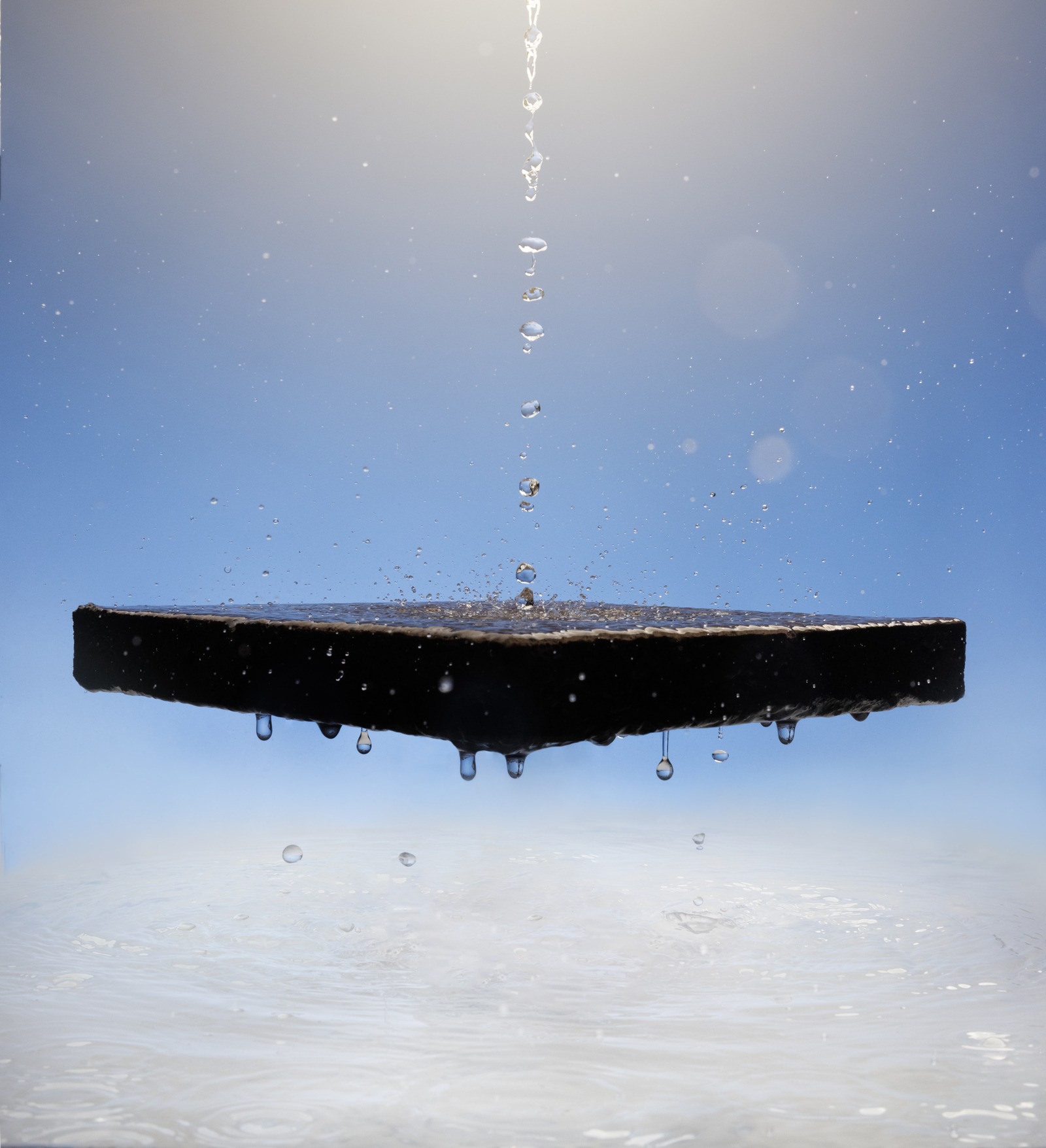
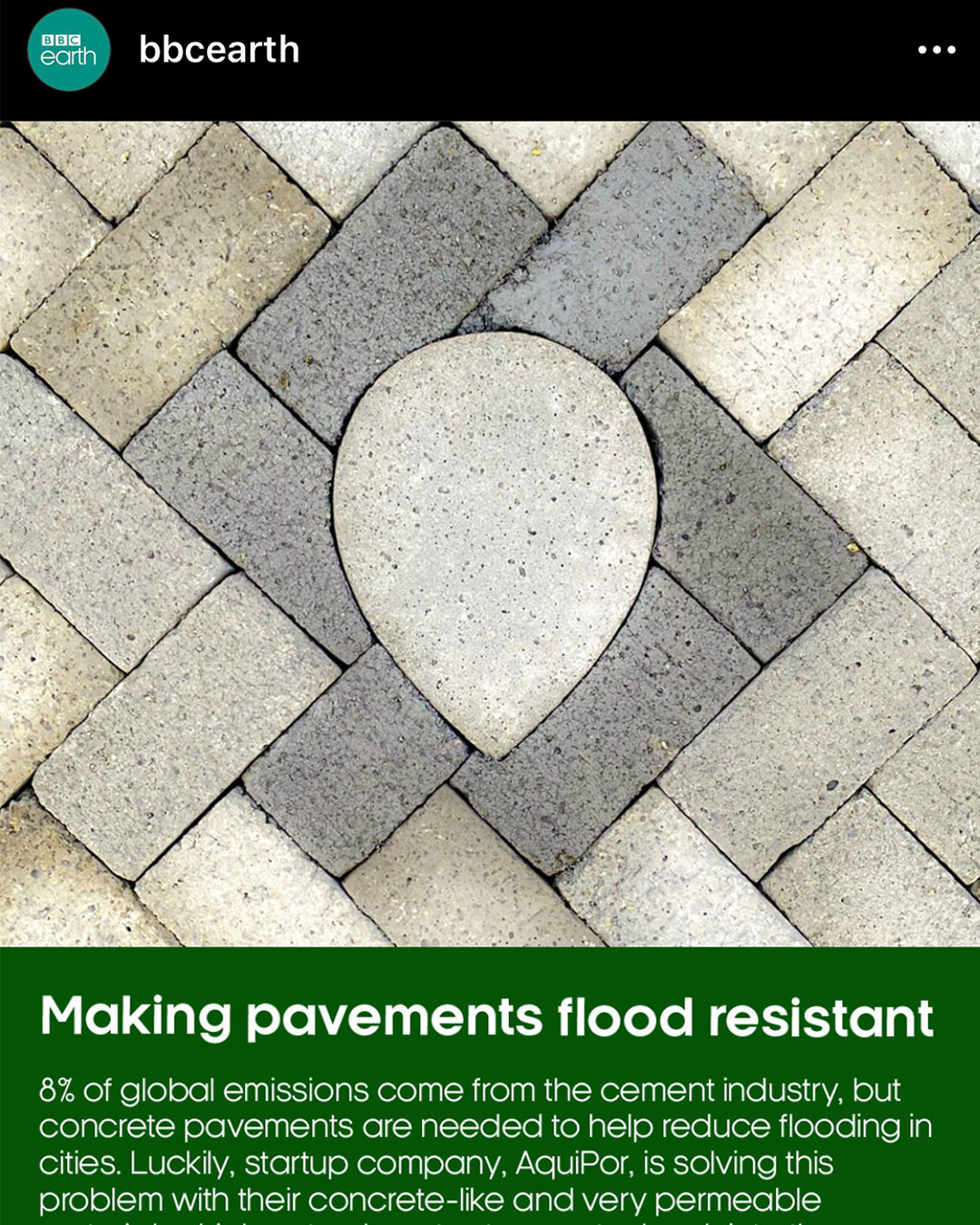
`Urban flooding from changing weather patterns is becoming more and more noticeable with each season. A startup called AquiPor has created a material that not only manages stormwater naturally, but also takes a fraction of the carbon to produce compared with standard concrete. AquiPort’s concrete-like material6 is highly permeable, allowing high volumes of rainwater to flow through it. This gets stormwater back into the ground naturally, reducing the threat of our cities flooding, while also filtering out pollutants. And given the colossal carbon footprint of concrete – 8% of global emissions come from the cement industry7 – the company’s paving the way for a greener urban landscape
Click Here to read the whole story
The current state of stormwater in the United States presents a unique challenge for design professionals of the present and future. The increased flooding and pollution problems associated with our changing weather patterns has become more noticeable with the passing of each season. The question now really is how bad will these problems become as the climate continues to change? For starters, recent studies indicate stormwater infrastructure built in the last 50 years was done so with data that did not account for climate change. In addition, infrastructure in 43 states are currently designed with data collected no sooner than 2015. Alarming for communities in the Pacific Northwest, rainfall records representing industry design storms date all the way back to 1973. The issues will continue to accelerate as long as The National Oceanic and Atmospheric Administration (NOAA) Atlas 14, which provides the data that determines design storm criteria, looks at the past and not the future. But even with the most up-to-date rainfall information, climate scientists warn that infrastructure is still likely to fail. The growing awareness behind these issues has brought forth $1.4 billion in direct federal funding over 5 years to the EPA Sewer Overflow & Stormwater Reuse Municipal Grant Program, reflecting only a small portion of an infrastructure bill that will directly impact stormwater improvement projects across the nation. The journey to bridge an $8 billion stormwater funding gap is now underway.

To help ease the fragmented planning efforts across the US, amendments to the Clean Water Act continue to legislate integrated planning, which identifies efficiency from separate wastewater and stormwater programs to best prioritize capital investments while achieving human health and water quality objectives. This holistic approach to planning builds community engagement, aligns objectives, and emphasizes a preparedness for change. The is a total of 30 integrated plans developed throughout the United States, a number expected to grow significantly through the decade.
Since 2015, the AquiPor team has recognized green infrastructure (GI) as a critical component to integrated planning efforts and are pleased to see this reflected in policy. Having said that, the current definition of GI as presented in the Clean Water Act falls short of incorporating the elements of integrated planning. GI is currently defined as "a range of measures that use plant or soil systems, permeable pavement or other permeable surfaces or substrates, stormwater harvest and reuse, or landscaping to store, infiltrate, or evapotranspirate stormwater and reduce flows to sewer systems or to surface waters." Defining green infrastructure simply by its performance characteristics detracts from the overall value of integrated planning. We aren't the only ones that feel this way. A recent study by The Frontiers of Ecology and the Environment reviewed 122 plans from 20 US cities, finding that city planning often fails to explicitly define green infrastructure, but when it does, stormwater concepts of GI are much more prevalent than landscape or integrative concepts. When defined, functions of GI are primarily hydrological. More functional diversity was found in landscape and integrative definitions of GI. In addition, stormwater concepts surrounding GI engage in greenwashing. The study calls for a broadened definition, one that focuses on the relations between ecological and built infrastructure systems to facilitate the production of social benefits. The review goes on to suggest the following definition : “A system of interconnected ecosystems, ecological–technological hybrids, and built infrastructures providing contextual social, environmental, and technological functions and benefits. As a planning concept, GI brings attention to how diverse types of urban ecosystems and built infrastructures function in relation to one another to meet socially negotiated goals”. We believe this broadened definition of GI incorporates the elements of integrated planning far greater than the one that currently sits in legislation.
AquiPors ecological-technological approach to stormwater management helps to redefine GI by incorporating current infrastructure improvement needs and applying them into a singular retrofit design. By simply modernizing our nation's sidewalks, we can re-imagine transportation by evolving complete street concepts, utilize existing gray infrastructure as real estate for a utility housing corridor, and decentralize the basic needs of our communities with a combination of ecological and built systems intended to thrive in the face of a changing climate. Resilient infrastructure requires a new and innovative approach for tomorrow, and AquiPor is excited to meet this moment.
An AquiPor ad was recently spotted in Times Square and this was ironically the same day that NYC got blasted with extreme rain and flooding that same evening.
These types of weather events are exactly why we’re developing our permeable surface technologies and engineered solutions to manage stormwater and mitigate urban flooding.
The reality is that the majority of flooding issues in our country occur due to current water infrastructure being completely overwhelmed in the face of modern-day storms. Our solutions are being developed to help ease the burden on existing water infrastructure.


Thrive Global recently interviewed our CEO Greg Johnson and uncovered what drives him and the AquiPor team in our quest to solve large, challenging issues surrounding water infrastructure and climate change. At AquiPor we believe that the biggest challenges represent the biggest opportunities and we're fiercely committed to helping solve them.
AquiPor is honored to be ranked among the top 5 emerging stormwater management startups globally in a recent report put out by StartUs Insights. We take great pride in the solutions that we’re developing with an eye toward solving stormwater issues on a grand scale and a ranking like this validates our work to this point.

In fairness to other emerging companies in the space, this list is far from exhaustive as there are a number of companies developing promising technologies that look to have a major role in stormwater infrastructure in the future. Ultimately, it is an encouraging sign to see the trajectory of innovation in a space that has been known to be devoid of it in the past.
At AquiPor we believe that stormwater and urban flooding issues can be solved within the confines of the existing urban environment in cities. As we continue to develop our permeable hardscape material and integrated engineering technologies, we believe that large scale green infrastructure will finally be possible within the existing built environment.
The best is yet to come.
At AquiPor, we believe that the bigger the challenge, the bigger the opportunity. Suffice to say, the enormous water challenges that our cities face today represent even bigger opportunities for AquiPor to make our mark. After five long years of ceaseless R&D, we’ve finally arrived at a technology that we believe can be paradigm shifting in urban stormwater management.
For those of you that have invested, you have invested in much more than just a new construction product for backyard patios. We are developing our material technology to be the future of on-site stormwater management in cities. In the future, this material could be used in engineered stormwater designs that we haven’t even thought of yet!
What makes AquiPor material different is the pore size. We use a completely novel chemical technology approach to get material that is strong and permeable, but which features sub-micron porosity. It is capable of filtering out dirt, debris, and particle pollutants that are known to compromise existing permeable pavements.
For cities and developers, this means a small footprint, low-maintenance permeable surface design capable of managing stormwater runoff naturally, right within existing corridors.
As you can probably imagine, there are a lot of urban street miles in the U.S. So to be able to supply the market, we’ve been diligently lining up our supply chain and future manufacturing plans. We are working on some exciting developments to that end, which I’ll be sure to announce when I can.
In the end, big things are possible with the right combination of vision, technology, people, and capital, and your support at the outset of this launch has been incredible. Keep sharing our story and spread the word. We’re extremely thankful for that!
We've put together a short video to explain "The AquiPor Difference" and hope you'll stay tuned to our page for further updates. In the meantime, don’t hesitate to reach out with questions. Onward!